
NOHO MAKA‘ALA
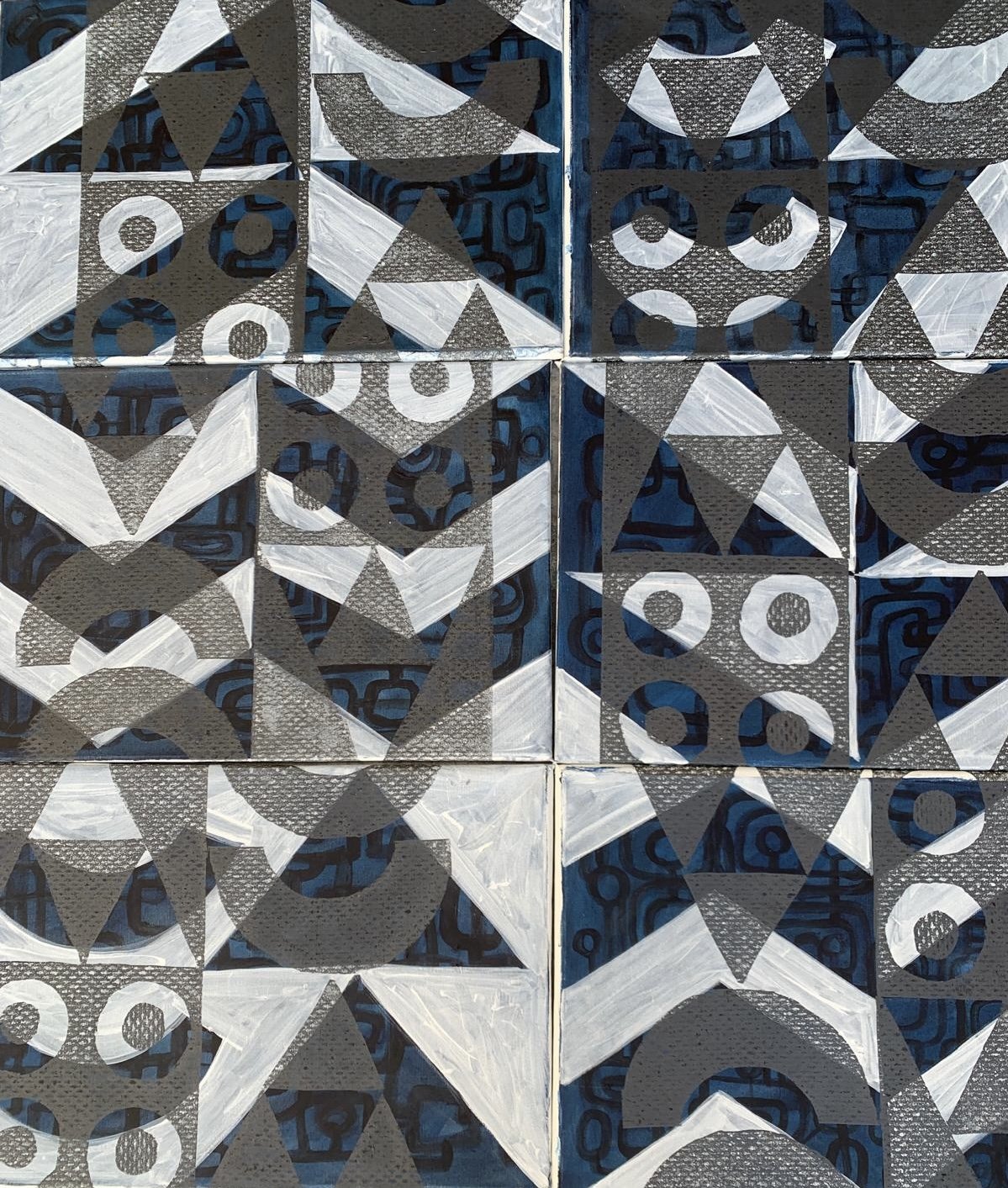
Size: 20” X 30” - series of 6
Medium: Acrylic on Canvas
2024
Noho Makaʻala is a work about learning how to stay attentive.
The title translates as “to sit in alertness,” and the piece is grounded in the Indigenous concept of makawalu — often understood as “eight eyes” or “many perspectives.” Rather than seeing from a single point of view, makawalu describes a practice of expanded awareness: paying attention to what is visible, what is subtle, and what unfolds over time.
The design intention is to cultivate deeper attention — to look beyond the immediate surface, consider what lies beneath, and recognize the enduring presence of ancestors, memory, and meaning woven through all things.
The work uses repeating geometric forms — circles, triangles, crescents — arranged in rhythmic sequences across the surface. These shapes function like visual markers or “eyes,” each one offering a partial view of a larger system of knowing. Together, they suggest a way of seeing that is layered and relational, shaped by ancestral knowledge, environmental awareness, and the responsibility to remain watchful.
Textured and raised elements recall tactile traditions such as kapa-making and carving, reinforcing the idea that knowledge is not only seen but also felt. The piece was developed through an iterative process of printing, painting, and layering, allowing patterns to repeat, shift, and build over time. As the surface evolves, it creates a steady visual rhythm — almost like a chant — that invites sustained attention rather than quick reading.
Noho Makaʻala asks for more than passive looking. It calls the viewer into a state of presence: to notice carefully, interpret with care, and remain accountable to both the seen and unseen worlds. Rooted in Kanaka Maoli ways of knowing, the work reflects an ongoing practice of staying alert — holding space with clarity, responsiveness, and cultural memory.
THE PROCESS
Noho Makaʻala was created through a layered process combining relief printing, stenciling, and acrylic painting. Herman Piʻikea Clark draws on the Kanaka Maoli concept of makawalu—to see through many lenses—using repetition, contrast, and abstraction to explore visual forms rooted in ancestral knowledge. Geometric shapes were carved, printed, and painted in rhythmic sequences, referencing both traditional design and contemporary Indigenous abstraction. Each layer responds to the last, building a visual field of attentiveness. The work reflects Clark’s commitment to process as cultural practice—where seeing is an act of relationship, memory, and responsibility.


